
Rethinking the JBP: How Agentic Collaboration Will Redefine CPG–Retail Partnerships
By Ray Boyd; originally published on LinkedIn: https://www.linkedin.com/posts/raymondboyd_agenticai-consumergoods-jointbusinessplanning-activity-7394773545136021505-h68N?utm_source=share&utm_medium=member_desktop&rcm=ACoAAACGT7sB2LWYF_FLIAeY2hcv4cpVpucD_kc
What JBP Meetings Were Meant to Be
Joint Business Planning (JBP) meetings have always been the moment where CPG manufacturers and retailers pause the daily noise to align on strategy. They’re supposed to sit somewhere between a line review and a top-to-top meeting:
- Broader than a line review, which tends to focus on assortment, shelf space, and pricing for a single category.
- More operational than a top-to-top, which is often about long-term partnership vision, investment commitments, or executive alignment.
The JBP is where those visions become executable — a shared plan for how both sides will drive growth together over the next 6–18 months.
At least, that’s how it’s supposed to work.
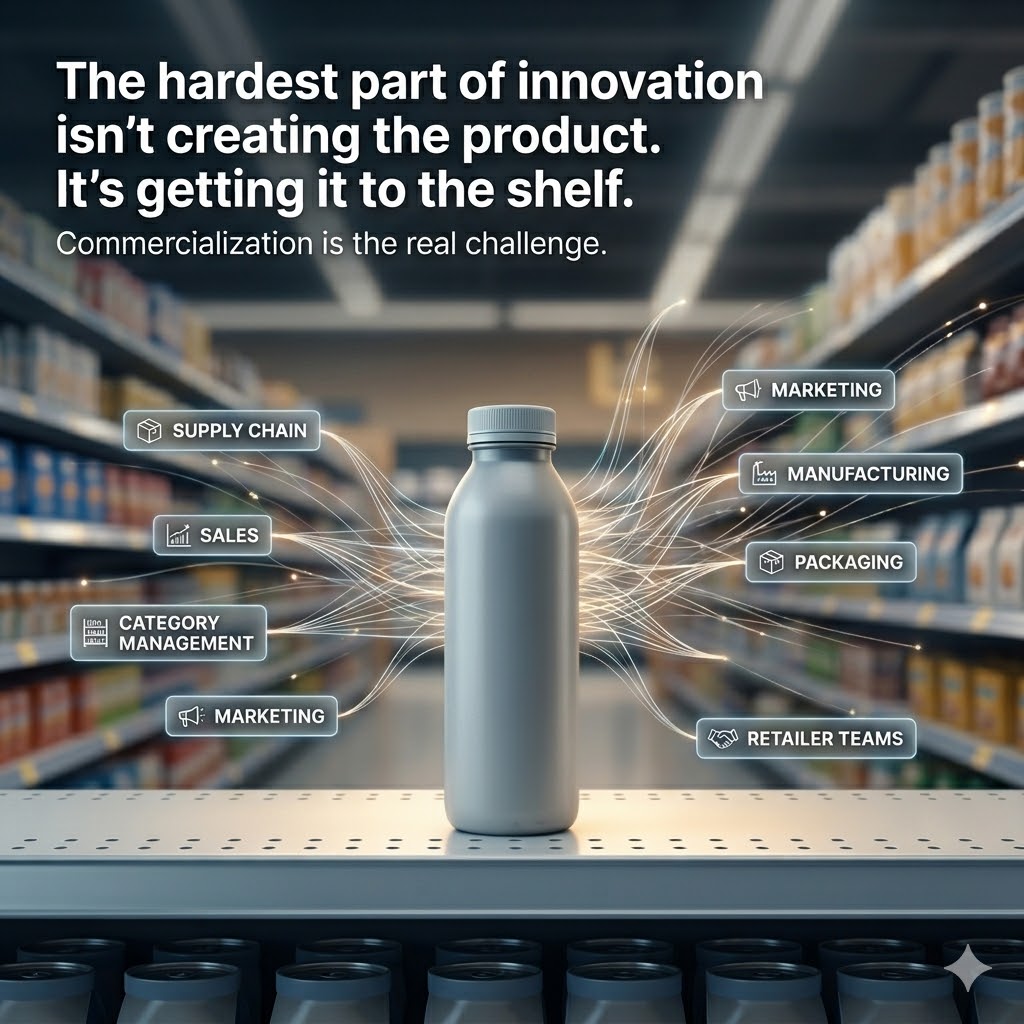
In practice, too many JBP sessions still look backward — debating last quarter’s numbers, re-hashing promotional calendars, and waiting for analytics teams to catch up with what already happened at the shelf. In fact, the image I chose for this post is an accurate reflection of how many retailers feel when presented with the same information over and over again during rearview looking JBP’s.
The Agentic Disruption: From Meetings to Continuous Co-Orchestration
That model is about to break — and rebuild itself.
As both manufacturers and retailers adopt agentic platforms, the entire rhythm of JBP will change.
Instead of periodic planning punctuated by PowerPoint decks, we’ll see continuous orchestration across connected AI systems that learn, simulate, and negotiate decisions in real time.
Retailers are already leading the way. They’re investing in agentic platforms that integrate assortment optimization, dynamic pricing, and promotion orchestration into a single operating layer.
Soon, manufacturers won’t just share slides — they’ll have to interface directly with those platforms. Their assortment proposals, pack price strategies, and promotional offers will need to talk to the retailer’s optimization engine — not just their category manager.
A Retailer’s View: The New JBP Expectations
From the retailer side, the shift is clear.
They will expect manufacturers to bring:
- Machine-readable offers and models that can plug directly into the retailer’s AI for simulation and scenario planning.
- Shelf-level learning loops — data that explains why things sell, not just that they sold.
- Agentic collaboration interfaces, where human and machine negotiate thresholds, not just trade budgets.
The retailer will ask new kinds of questions:
- “Can your offer dynamically flex by store cluster when my system senses a weather-driven demand spike?”
- “Will your shelf-ready packaging design feed my planogram AI so it can reflow inventory automatically?”
- “If my price optimizer detects promo cannibalization, can your model re-optimize mix in real time?”
These aren’t hypothetical. They’re the natural evolution of JBP into system-to-system negotiation.
Vignette: A Glimpse of the Future JBP
Imagine a future JBP between a beverage manufacturer and a large grocery chain.
Instead of exchanging spreadsheets, both sides log into a shared agentic planning environment.
The retailer’s platform runs a demand simulation using live POS, loyalty data, and local weather forecasts. The manufacturer’s agent plugs in its own trade promotion and route constraints.
Within minutes, both systems converge on a scenario:
- Adding a secondary display of the new hydration SKU in 1,200 stores during the next regional heatwave.
- Pulling back on low-ROI multipack discounts in colder regions.
- Reallocating promotional funds automatically to maximize unit lift within margin targets.
The “meeting” becomes a conversation about strategy and confidence thresholds — not data alignment. Humans still lead, but the agents handle the math in real time.
Will the JBP Still Be Relevant?
Yes — but it will look very different.
The JBP will evolve from an event to an environment. From an annual ritual to a continuous partnership loop. From “alignment” to co-decisioning.
Manufacturers who cling to the old cadence — building slides, negotiating budgets, and waiting for retailer feedback — will find themselves outpaced by those who can integrate directly into the retailer’s agentic infrastructure.
Who Should Blink First?
That depends on perspective.
Retailers are already acting — building their agentic cores now. Manufacturers can’t afford to wait for invitations; they need to modernize their data products and APIs so they can connect when the call comes.
Transformation steps include:
- Agent-ready data architecture: standardize product, pricing, and promotion data into machine-readable formats.
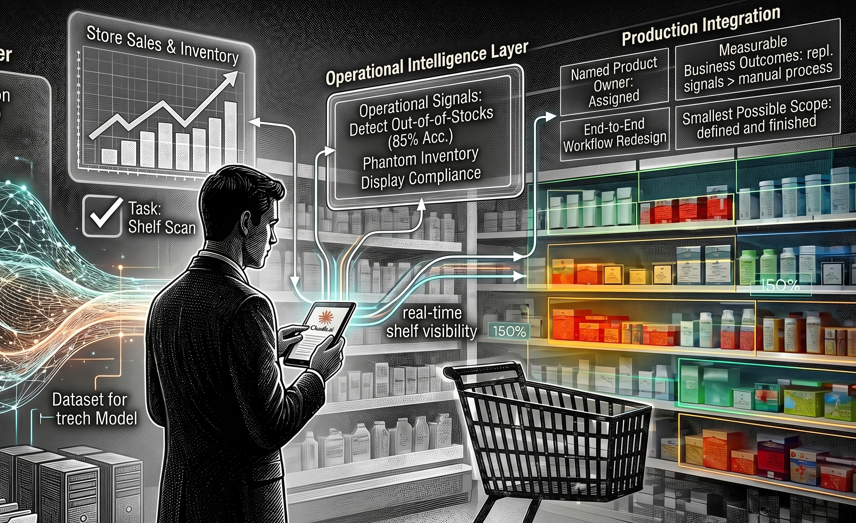
- Shelf signal integration: turn retail execution data into the “voice of the shelf” — the feedback loop that feeds both planning systems.
- Noise-to-threshold filters: build logic that helps agents decide when a signal from the field deserves upstream action.
- Simulation capability: enable rapid what-if modeling that can meet a retailer’s optimizer on equal footing.
In short: don’t wait to be asked to plug in. Build now.
#AgenticAI #ConsumerGoods #JointBusinessPlanning #RetailExecution #RetailReinvention#SalesTransformation #DataCollaboration #AccentureCGS