The Shelf That Exists Will Beat the Shelf You Designed
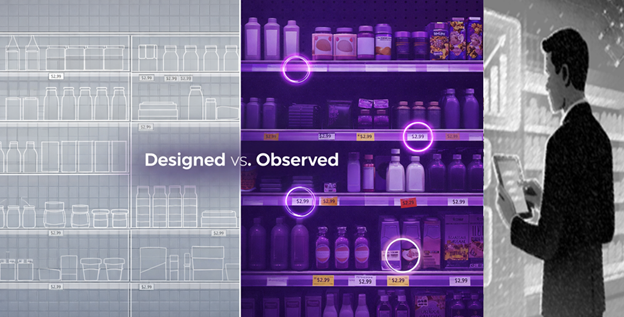
A planogram is a declaration of intent. It tells us what should be on the shelf, how many facings it deserves, and where it belongs. It is clean, rational, and optimized in conference rooms. For decades, we have measured compliance to it, defended it in line reviews, and built systems to enforce it. But shoppers do not buy the planogram. They buy what is physically present in front of them.
That is where the “real-o-gram” comes in — a term that has circulated in retail execution circles for years to describe the actual condition of the shelf as observed through photos or audits. With computer vision, shelf cameras, autonomous robots, and camera-enabled sweepers moving through aisles, the shelf is becoming continuously observable. The real-o-gram is no longer a photo. It is becoming a data stream.
And that changes the economics of execution.
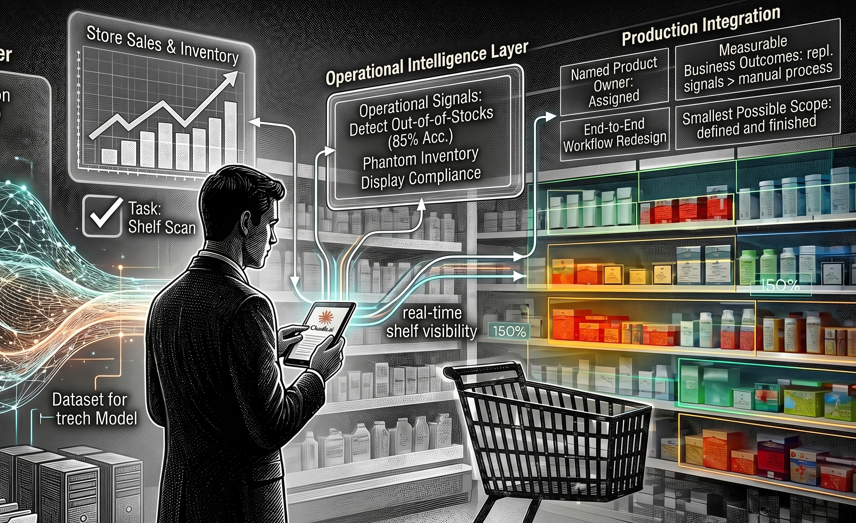
A planogram supports compliance. A real-o-gram enables sense and respond. When the system can see that a SKU is truly void, misplaced, incorrectly priced, or masked by phantom inventory, it can recommend a precise next best action. Not “visit and check,” but “fix this, here, now.” We are already seeing this shift. In publicly available case work, Accenture has helped CPG clients deploy AI-enabled “Perfect Store” platforms that combine shelf images, POS, and planogram data to flag missing SKUs in near real time and trigger corrective workflows. In another example, Accenture has worked alongside computer vision partners to digitize store visits at scale, allowing manufacturers to move from manual audits to algorithmic detection of voids and display non-compliance.
The common thread is not the technology itself — it is the ability to connect detection to action and then measure the commercial impact. That is where real-o-gram data becomes transformative. It closes the loop. When an action is taken, we can measure whether the root cause was correct, whether the fix held, and whether sales recovered. Models trained on observed shelf reality become smarter than models trained on lagging POS alone. We begin separating true demand softness from execution failure. We improve expected velocity modeling by isolating unconstrained demand. We elevate joint business planning because conversations shift from opinion to shared evidence. There is also a structural implication for the industry. Retailers have long monetized POS data through syndicated partners such as Circana and NielsenIQ.
Shelf reality is the next logical asset. When shelf conditions are digitized continuously, they become measurable. When measurable, they become valuable. Last year, I wrote about the promise of computer vision in retail. Here an update and prediction: by the end of 2026, leading retailers currently piloting camera-enabled robots and autonomous sweepers will begin commercializing structured shelf real-o-gram feeds to manufacturers. Not dashboards. Data. For purchase — much like POS became syndicated twenty years ago. When that happens, competitive advantage will shift from who designed the best planogram to who can operationalize shelf reality into closed-loop action the fastest.
#RetailExecution #AgenticAI #VoiceOfTheShelf #CPG #AI #Accenture #ThinkingBeyondTheStoreVisit