Store Manager’s View: Why Retail Execution Still Misses the Moment
At a Walmart Supercenter recently, and the store manager has been on the floor for twelve minutes. She already has her day.
What she doesn't have, and didn't ask for, is the six CPG reps who will walk through her doors before lunch. One will want a display moved. One will want her to sign off on a reset. One will tell her a new item is late. One will quietly fix his own out-of-stock and leave. Two will ask her where something is.
Every one of them believes their visit is the priority for the building that day.
We've been designing retail execution myopically for twenty years
I spent a decade on the Wrigley side of this, failing to consider the bigger picture, moving from one priority to the next: seasonal resets, check-lane repositioning, the whole lived experience of working planogram compliance. So I'll say this plainly:
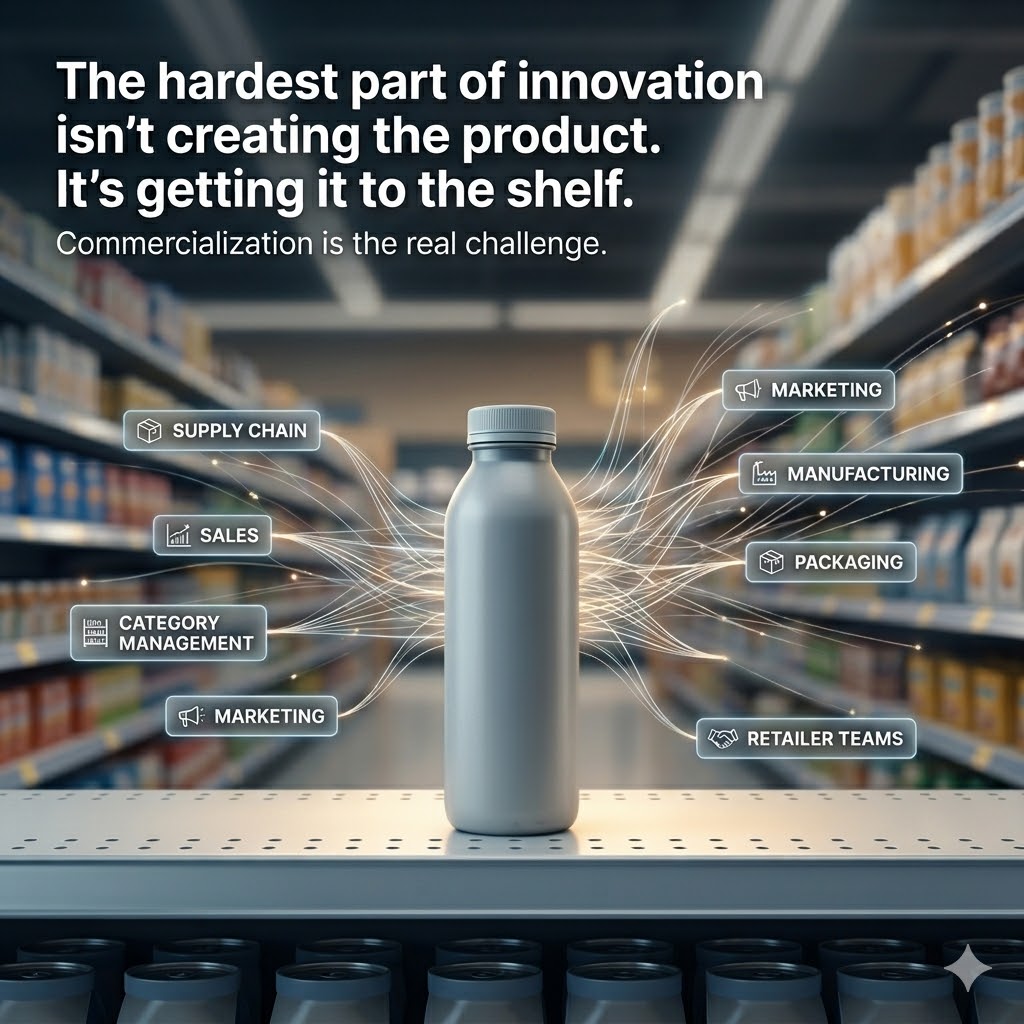
The retail execution playbook most CPGs run today wasn't designed for the store. It was designed for CPG headquarters.
Coverage targets. Visit counts. Compliance scorecards. Perfect-store indices. Every one of those metrics answers an HQ question. None of them answer the only question the store manager is actually asking:
"Is the person walking through my door right now going to make my day easier — or harder?"
That's the whole game. And we keep losing it.
The Parade
There's a name for what the store manager actually experiences. I call it the parade.
The parade is what retail execution looks like from her side of the counter. It isn't strategy. It isn't coverage. It's a stream of well-intentioned people, each carrying a different handheld, each convinced their square of the shelf is the most important square in the store.
A few things are true about the parade at the same time:
• Most of the reps in it are good at their jobs.
• Most of the work they're asking for is legitimate in isolation.
• None of them are coordinating and batching priorities.
• The store manager is expected to absorb the coordination cost herself.
This is the quiet failure mode of modern retail execution. It's not that any single company is doing the wrong thing. It's that collectively, we've built a system where doing the right thing, showing up, checking the shelf, pushing the display, produces noise on the floor instead of signal.
The myth of the "good store visit"
Ask ten CPG leaders what makes a good store visit and you'll get ten confident, completely different answers. Shelf conditions. Display compliance. Price integrity. Incremental distribution. New-item speed-to-shelf.
They're all right.
And none of them are right at the same time.
A high-value visit in a high-traffic store today does not mean the visit will have the same value later in the week. What matters in beverages is not what matters in confectionery. What moved the needle last week has nothing to do with this week's holiday sell-through or next week's reset. The store is a quilt. And yet most execution plans are still cut for a single square.
From the store manager's perspective, the question was never "Are we doing everything?" The question is, and has always been:
"Are you doing the one thing that actually matters in my store today?"
Very few CPG’s can answer that question honestly. Even a more modern approach to retail execution or agentic next-best-actions meet this high hurdle.
Store managers don't want fewer visits. They want smarter ones.
Every time I share this point of view with a commercial leader, the first instinct is the wrong one:
"So we need to cut visit frequency."
No. That's the HQ reflex; solve a store problem by changing an HQ number.
Store managers aren't asking for fewer reps. They're asking for fewer reps running generic playbooks. They're asking for fewer visits that solve yesterday's problem. They're asking for the one who actually knows this store — the one who walks in and says, "I saw the endcap fell off Friday, I balanced inventory between the primary shelf location and the display, but we need to order 5 more cases or we will run out of inventory."
This is not a coverage problem. It's a decision-quality problem.
And decision quality is where this conversation stops being about field ops and starts being about agents.
Why this becomes an AI problem (whether we like it or not)
Humans are bad at orchestrating dynamic execution across 4,500 stores, seventeen categories, a labor-constrained back room, and a calendar that changes every Monday.
We generalize. We reuse last quarter's answers. We default to the average store. Which, not very helpfully, doesn't exist.
Store conditions don't generalize. The shelf doesn't care about your national playbook.
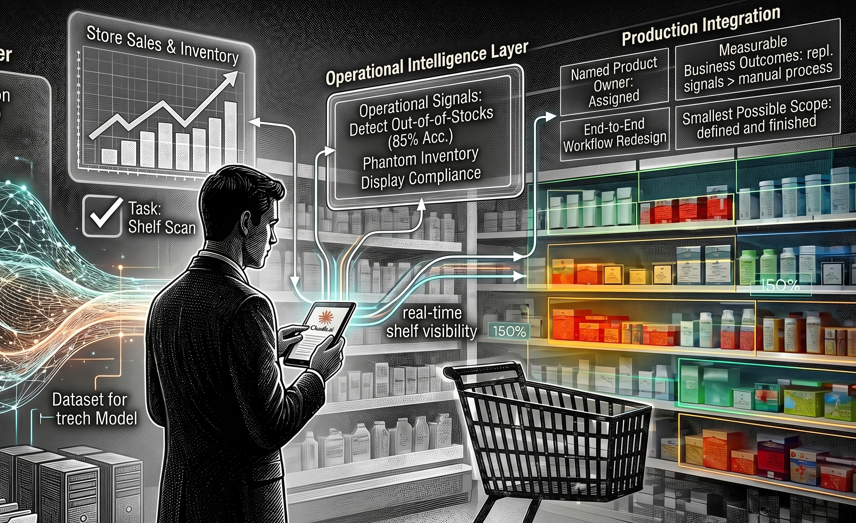
The real opportunity in agentic retail execution isn't automation. It's restraint. It's the system finally being willing to say
"Don't go today. This store doesn't need you. Go to the one four miles away that does."
An agent that can decide which stores actually need attention, recommend the single action that will matter, and suppress everything else changes the experience for the store manager entirely. Fewer interruptions. Sharper visits. Reps who show up with a reason the store manager actually cares about.
That's what the voice of the shelf is supposed to sound like; not more dashboards, not more coverage, but a system with the discipline to tell its own field team to stand down when standing down is the right answer.
The design principle we keep ignoring
If your retail execution strategy makes sense in a conference room and feels like chaos on the floor, it's not a communication problem. It's a design problem. You designed it without asking how it feels to run a store. Perhaps you even fell farther short, failing to account for what it feels like for your rep to walk a store. Fun story on "walking a store"... I recently created a Claude Skill agent designed to act as a field service representative to test our logic: prioritize next-best-action tasks based on 'size of prize,' the Skills persona agent flagged a critical flaw: following that logic would force a rep to zigzag inefficiently across a massive retail floor. An oversight on my part, but the fact that the agent, using its built-in logic 'skills', caught the workflow conflict before we shipped saved us from a major operational headache.
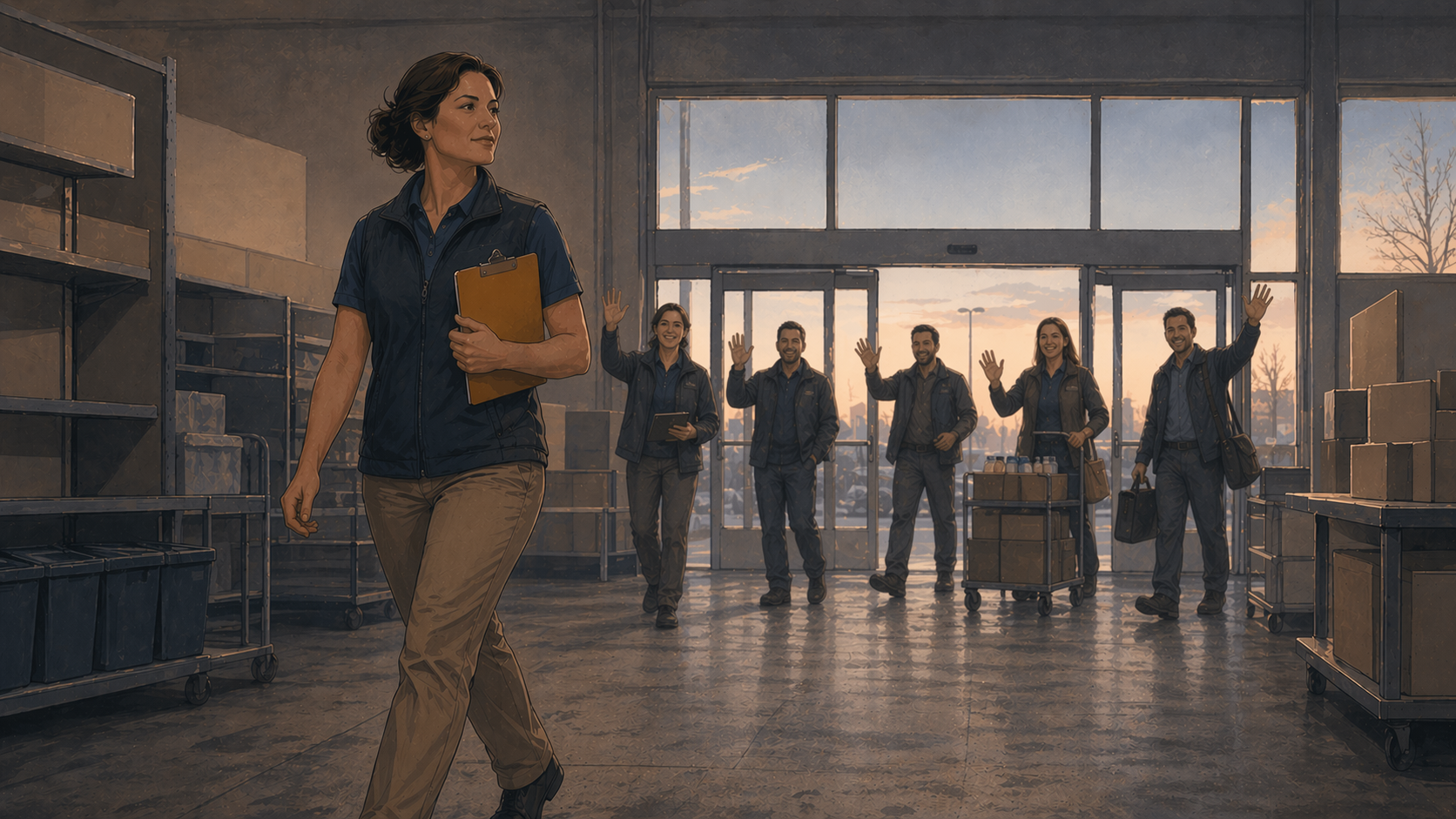
The next decade of retail execution won't be won by the CPG that does the most work in stores. It'll be won by the one that does the least unnecessary work. When a rep walks through the door, the store manager is genuinely glad to see them.
#RetailExecution #CPG #Retail #FieldOperations #SalesStrategy #AI #AgenticAI